Introduction
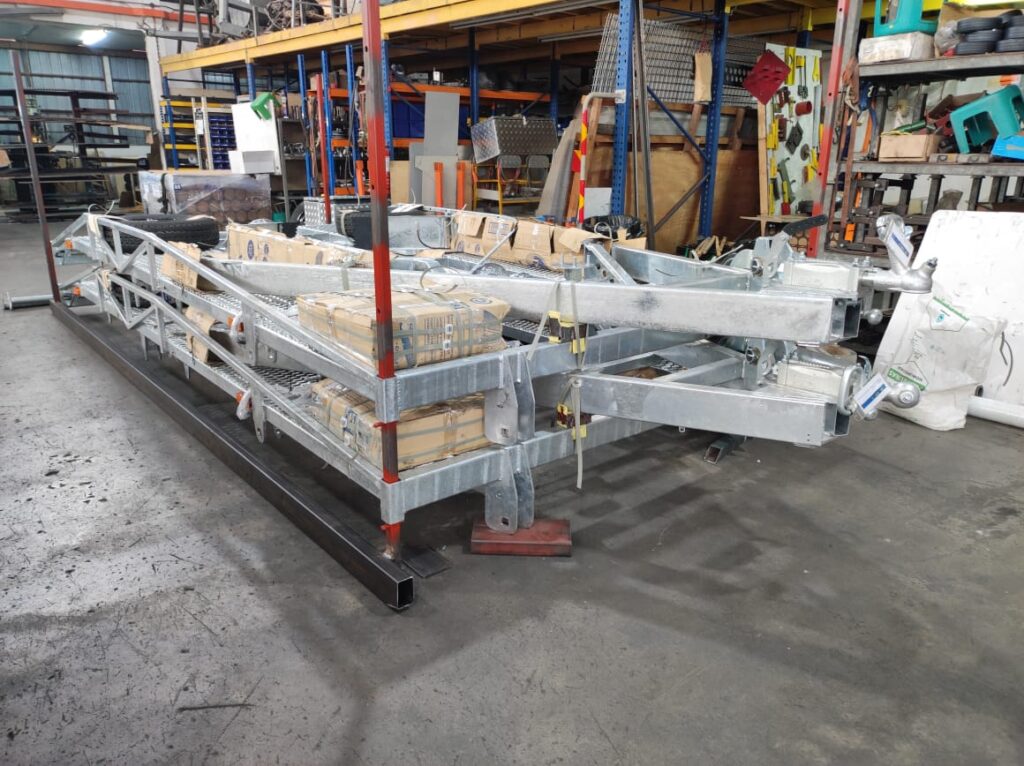
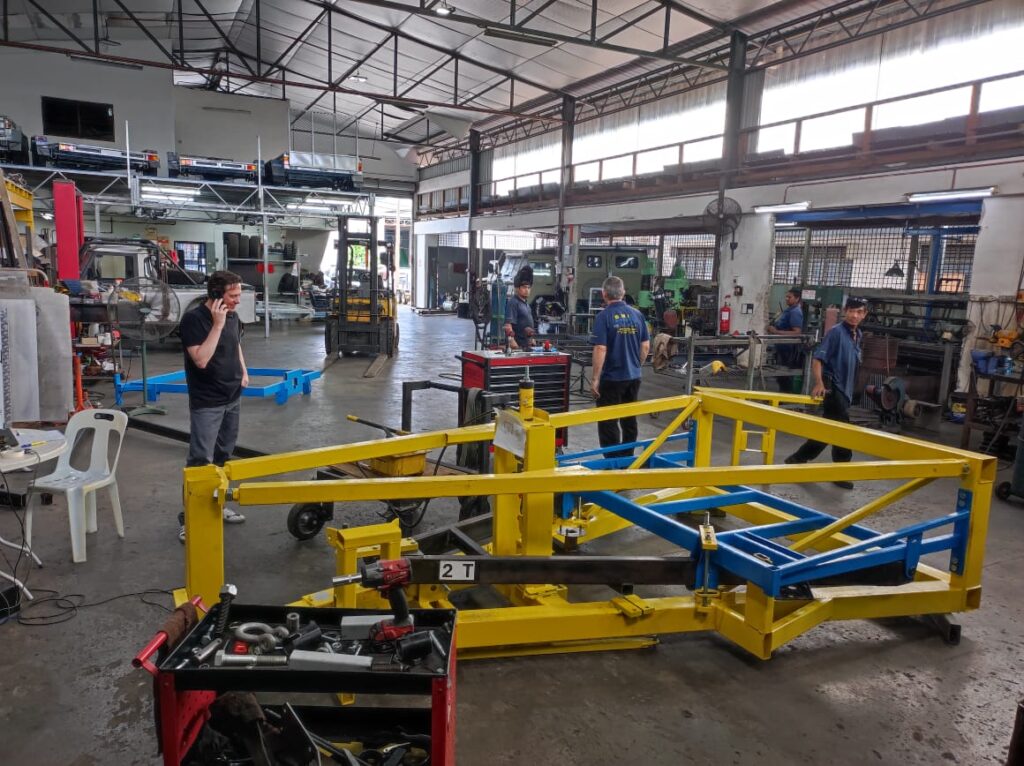
In 2019, we set out to import the first B.M.I. trailers from Malaysia. Brett is an exceptional trailer builder who consistently follows a set of core principles: keep the engineering simple and reliable; test, refine, and test-drive every design until drivability, durability, and loadability are fully optimised; and build tough trailers suited to all road conditions, with properly sized wheels and extremely strong anchoring points for the suspension and drawbar.
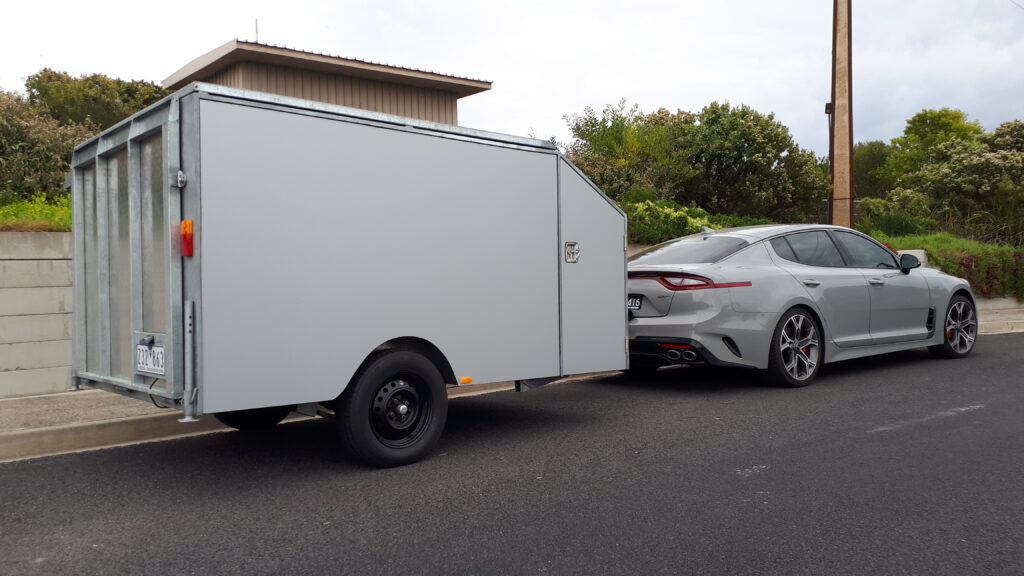
Each trailer is built to last for many years, featuring a hot-dip galvanised steel chassis, high-quality wiring, and premium trailer components—making them as close to bulletproof as a trailer can be.
Since then, we have put many B.M.I. trailers on Australian roads, including our own units, which have covered thousands of kilometres. Not always used for its intended purpose of bike transport, they have often been used to move our components across Australia instead. This real-world use has left no doubt: these trailers are genuinely built for purpose—robust, reliable, and designed to handle Australian conditions.
In recent years, regulatory requirements for trailers in Australia have changed significantly under the Road Vehicle Standards Act (RVSA), alongside updated guidance in Vehicle Standards Bulletin 1 (VSB1), resulting in stricter engineering, testing, and compliance standards. These updated requirements have substantially raised the bar for trailer design, construction, testing, and certification.
Rather than seeing this as a hurdle, we saw it as an opportunity. That’s when we decided to take things to the next level and introduce a new generation of car trailers to Australia. Developed by B.M.I. Engineering and certified in cooperation with Ceedra Engineering Services in Melbourne, we now offer two new open car trailers with Australian Type Approval.
The new B.M.I. car trailers are the CT20HF and CT32FF.
Description and Specifications – CT20HF and CT32FF
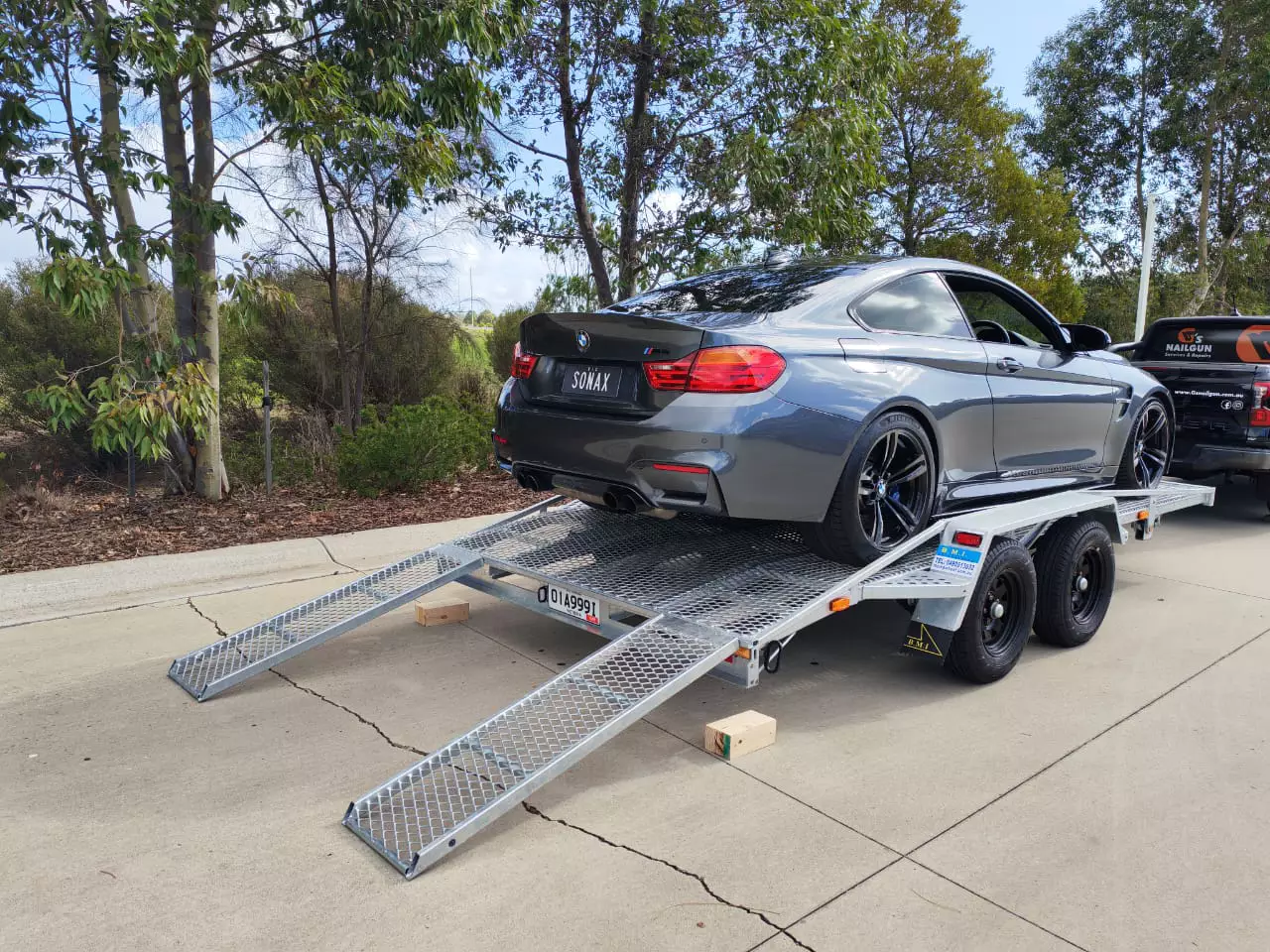
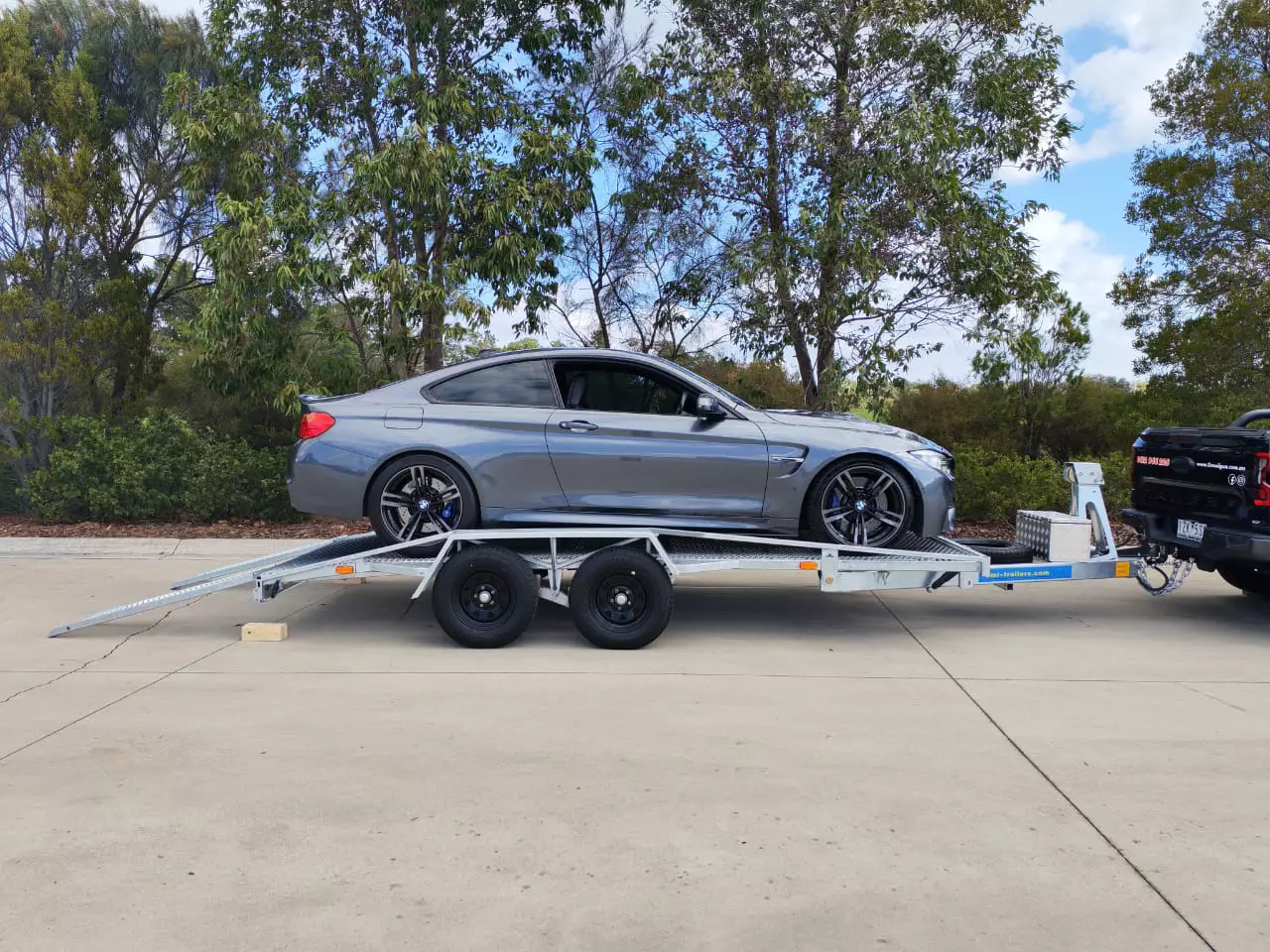
At first glance, the CT20HF and CT32FF appear almost identical, as their overall dimensions are the same. Both are tilt trailers, equipped with pull-out ramps stored under the floor, allowing for easy and safe loading—even for very low vehicles. The tilt function is supported by an airbag system, which can be inflated or deflated as required. After loading the vehicle, the driver can comfortably enter and exit via the integrated steps and low-profile mudguards.
The key difference lies in their ATM (Aggregate Trailer Mass) capacity. The CT20HF is rated at 2.0 tonnes, while the CT32FF offers a 3.2-tonne capacity—resulting in two distinctly different trailers tailored to different use cases.
With the CT20HF, the focus is on weight reduction. The half-floor configuration, combined with a specific drawbar and flatbed design, reduces the trailer weight by approximately 170 kg compared to the CT32FF. This provides a significant advantage when towing and still allows for a payload of up to approximately 1,400 kg—sufficient for many applications. The use of smaller wheels also lowers the floor height, resulting in a shallower approach angle. Override disc brakes on a single axle ensure compliance with regulations.
The CT32FF represents the top-of-the-range model, with a 3.2-tonne ATM. It features a significantly reinforced construction and suspension, larger wheels, and four electric brakes with a breakaway system. This enables a payload capacity of up to 2.40 tonnes. It is ideally suited for transporting heavier vehicles and requires an appropriate rated tow vehicle.
A complete breakdown of all differences between the two models can be found in the detailed specification sheet.
|
B.M.I. CT 2026 Trailer Specifications |
||
|
|
CT 20 HF |
CT 32 FF |
|
Length |
6200 mm |
6200 mm |
|
Width |
2500 mm |
2500 mm |
|
Mud guard height |
700 mm |
700 mm |
|
Width between mudguards |
2030 mm |
2030 mm |
|
Floor length |
4550 mm |
4550 mm |
|
Floor width |
1960 mm |
1960 mm |
|
Floor type |
half floor |
full floor |
|
Floor section widths |
500 mm |
|
|
Floor height |
500 mm |
540 mm |
|
Height between floor and mudguard |
190 mm |
190 mm |
|
Approach angle of loading ramp with floor tilted (approx.) |
6 degree |
7 degree |
|
Ramp length |
1400 mm |
1400 mm |
|
Ramp width |
400 mm |
400 mm |
|
|
|
|
|
Brake system |
override |
electric break away 10 x 2 |
|
|
mech. disc |
drum |
|
|
2 wheel |
4 wheel |
|
|
|
|
|
Wheel |
13 x 4.5 steel |
14 x 6 steel |
|
PCD |
114.3 mm |
114.3 mm |
|
Offset |
0 |
0 |
|
Tyre |
175R13C |
185R14C |
|
|
|
|
|
Suspension |
60 mm wide |
60 mm wide |
|
|
leaf springs |
leaf springs |
|
|
high articulation |
high articulation |
|
|
load balance arms |
load balance arms |
|
|
shock absorbers |
shock absorbers |
|
|
|
|
|
Storage box |
optional |
optional |
|
Winch stand |
optional |
optional |
|
LED lighting |
yes |
yes |
|
Tilt floor |
yes |
yes |
|
Tare weight |
600 kg |
770 kg |
|
ATM |
2000 kg |
3200 kg |
|
GTM |
1800 kg |
2880 kg |
|
Frame |
steel |
steel |
|
|
hot dip galvanized |
hot dip galvanized |
|
Coupling |
50 mm override |
50 mm fixed |
|
Ideal Towbar height |
420 mm |
450 mm |
|
Electrical plug |
12 pin |
12 pin |
The video provides an overview of the trailer and demonstrates the loading and unloading procedure.
A key feature of the trailer is the hinged drawbar, which allows the rear of the trailer to be lowered, significantly improving the loading and ramp angle. Raising the front section is assisted by a pneumatic cylinder, operated via a simple manual pump. If preferred, a cordless power tool can also be used for this function (tool not supplied).
At the rear, two solid ramps slide out, creating a shallow 6-degree approach angle. This enables even very low vehicles to be loaded with ease. Vehicles can be driven on and off the trailer under their own power, and thanks to the low-profile mudguards, the driver can open the doors while the vehicle is on the trailer, allowing for easy access. A solid stepping plate further enhances safety and convenience when getting on and off the trailer.
The expanded mesh floor, combined with multiple strategically positioned tie-down points, ensures versatile and secure vehicle anchoring. Optional accessories include a winch post, toolbox, and tyre rack, allowing the trailer to be configured for a wide range of applications.
B.M.I Engineering Gallery